
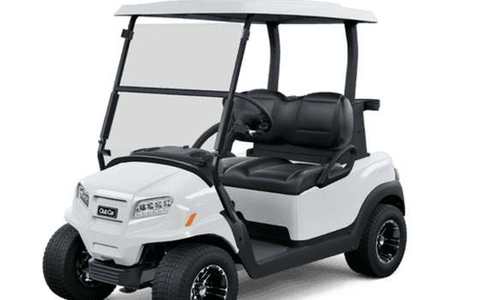

Street-legal golf carts and LSVs
A golf cart with lights is not automatically street legal. Here is the difference.
“Street legal” is the most misunderstood phrase in the golf cart business. A cart with headlights and a mirror is not automatically legal on a public road. Whether you can drive a cart on a street depends on what the vehicle is under the law and what the city or county allows.
Golf cart, PTV, or LSV
Federal safety standards define a low-speed vehicle as a four-wheeled motor vehicle, other than a truck, whose top speed is more than 20 and not more than 25 miles per hour, with a gross vehicle weight rating under 3,000 pounds. An LSV has to be built with specific equipment, including headlamps, turn signals, stop lamps, reflectors, mirrors, a parking brake, a windshield, seat belts, and a vehicle identification number. That standard is 49 CFR 571.500.
A golf cart that cannot reach 20 miles per hour is not an LSV, no matter how much equipment is bolted on. In Georgia, those slower carts usually fall under the state’s personal transportation vehicle rules, and they may only use streets a local government has designated. Georgia’s definitions are laid out by the Department of Public Safety, and we walk through them in the Georgia street-legal golf cart laws guide.
Buying an LSV
- Ask whether the cart was manufactured as an LSV with a 17-character VIN and a manufacturer’s certificate of origin, or converted later. Conversions can be hard or impossible to title in some states.
- Ask how the dealer handles title and tag paperwork in your state.
- Check insurance before you buy. An LSV on public roads needs to be insured like a vehicle in many states.
- Check the local ordinance. Even a titled LSV is limited to roads with lower speed limits, and some communities add their own rules.
Other states on this site
Florida, South Carolina, Alabama, Tennessee, and Texas each have their own golf cart and LSV rules, and communities such as The Villages in Florida post their own. The dealers listed below publicly offer street-legal or LSV models. Ask them what their customers need to do locally.
Dealers
33 dealer listings
Free listings from public sources. Each entry uses the business’s own published name, address, phone, and website, with a source link. Featured spots are chosen by the editor and are not paid unless they are marked Sponsored. We do not publish prices, ratings, reviews, or inventory. Confirm details with the dealer before you go.
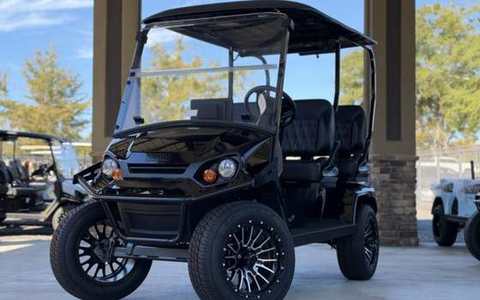
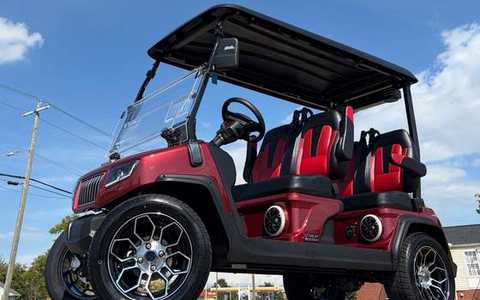
Botero Carts — Peachtree City
1001 Moba Dr, Suite C, Peachtree City, GA 30269
Photo from boterocarts.com
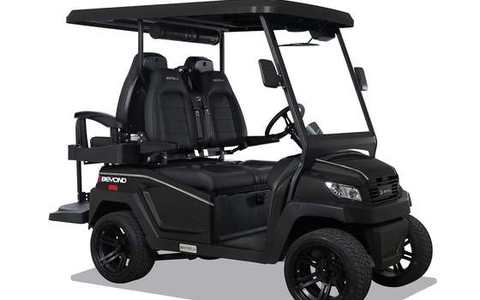
Bintelli Golf Carts — Peachtree City
100 N Peachtree Pkwy, Suite 8B, Peachtree City, GA 30269
Photo from bintelligolfcarts.com
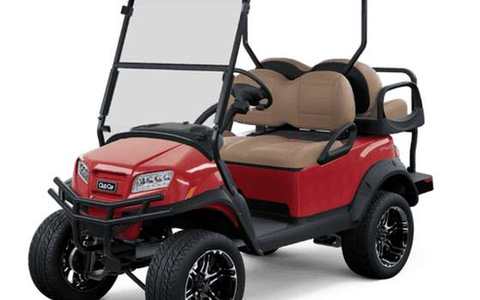
Specialty Car Company
1545 Mountain Industrial Blvd, Stone Mountain, GA 30083
Manufacturer photo: Club Car

Local Golf Carts & EV — Ocala
1919 NE Jacksonville Rd, Suite 103, Ocala, FL 34470
Photo from localgolfcarts.com
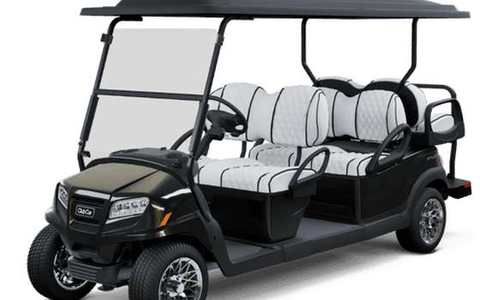
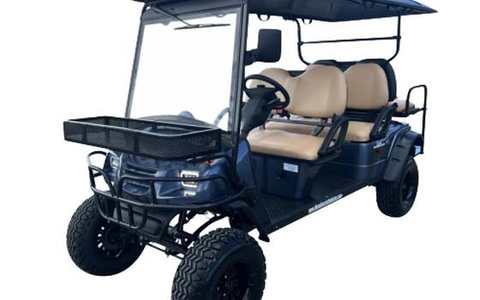
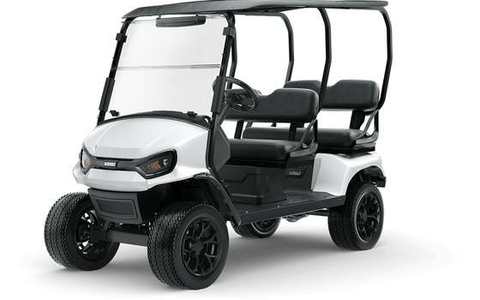
Garrett's Golf Cars — Charleston area
594 Johnnie Dodds Blvd, Mount Pleasant, SC 29464
Photo from gowithgarretts.com
Garrett's Golf Cars — Greenville area
604 Northwoods Dr, Suite D, Fountain Inn, SC 29644
Photo from gowithgarretts.com
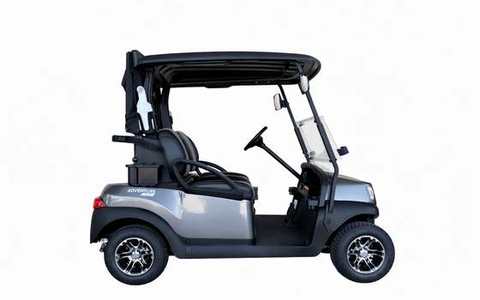
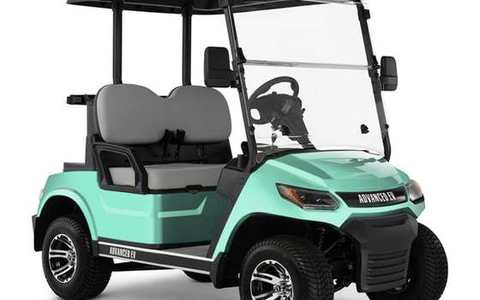
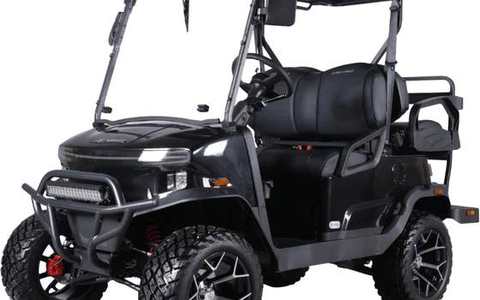
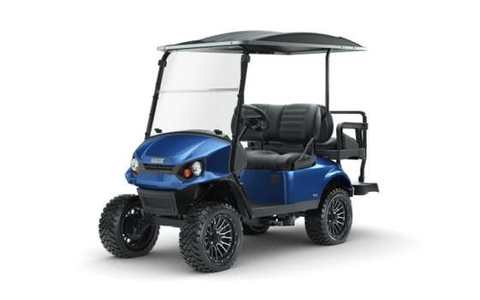

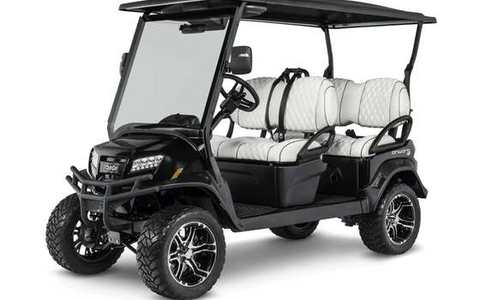

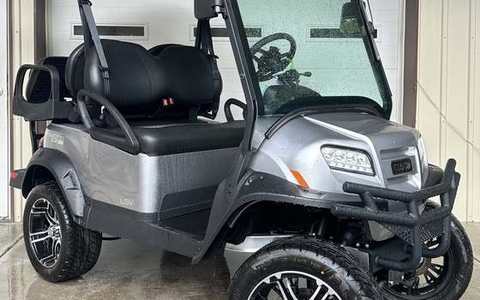
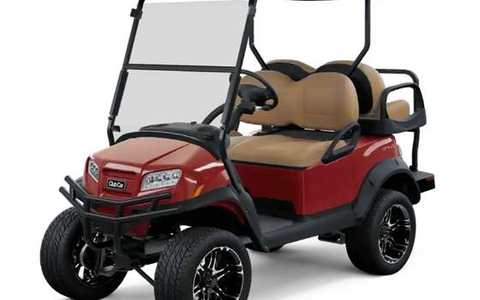
Golf Cars of Coastal Carolina
5912 Carolina Beach Road, Wilmington, NC 28412
Photo from golfcarsofcoastalcarolina.com
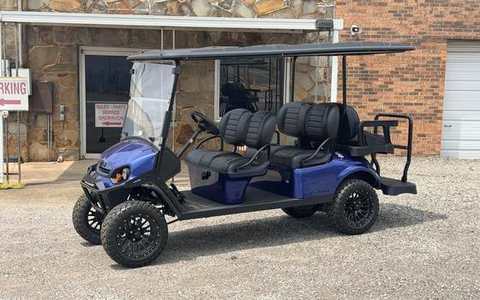



Golf Cars of Houston Superstore
11219 N. Freeway, Houston, TX 77037
Photo from golfcarsofhouston.com


Frequently asked questions
What makes a golf cart street legal?
On public roads, the vehicle generally has to be a low-speed vehicle built to the federal standard in 49 CFR 571.500, with the required equipment and a VIN, or it has to be on a street that a local government has opened to golf carts or personal transportation vehicles. Rules vary by state and city.
Can I make my golf cart street legal with a kit?
A kit adds equipment, but it does not change the cart’s top speed classification or its paperwork. Whether a converted cart can be titled as an LSV depends on your state. Ask the dealer and your tag office before you spend money.
How fast can an LSV go?
Under the federal definition, an LSV has a top speed greater than 20 and not more than 25 miles per hour.