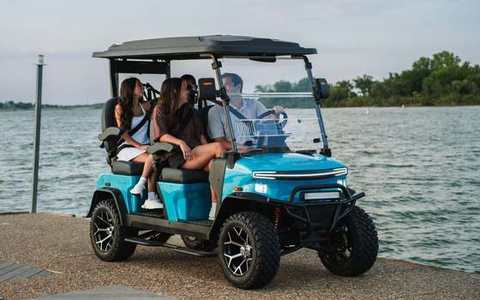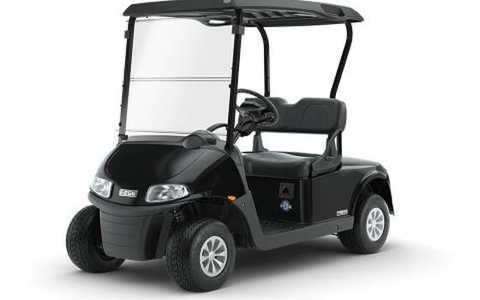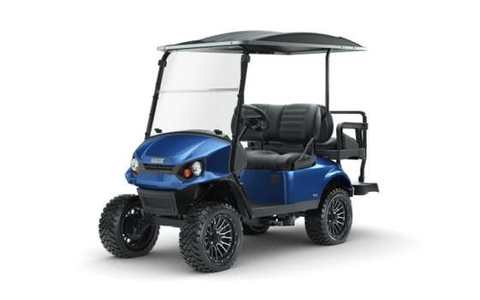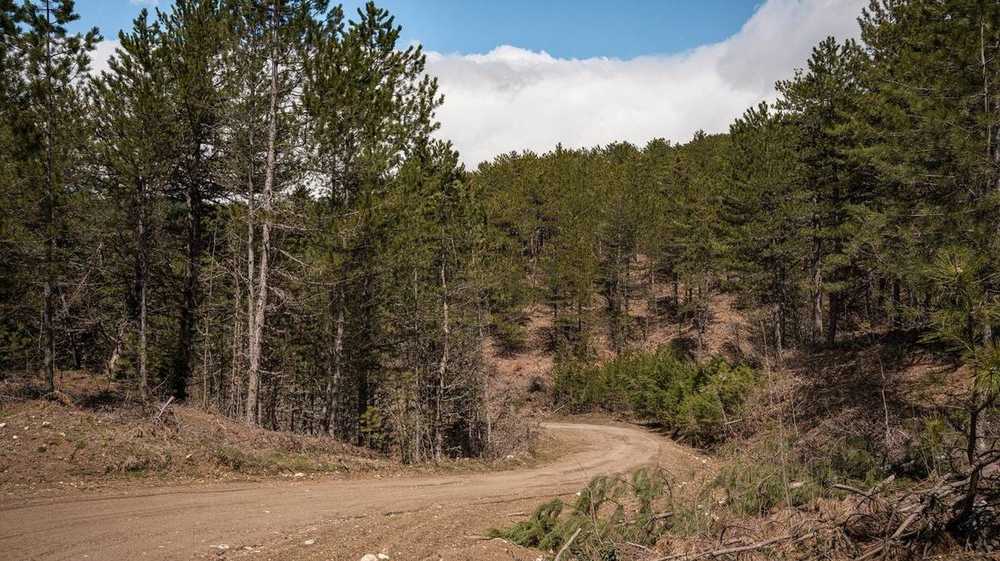
An electric golf cart for hunting earns its keep on the last stretch into a stand, when a gas four-wheeler would already have announced you. It is quiet. It does not leave a trail of exhaust. It will carry a stand, a pack, a cooler, and, if the day goes well, the deer. It will not replace a side-by-side on a steep, rutted, or flooded trail, and it is only as good as the battery, the tires, and the rules of the land you are on. This guide covers how to set up a quiet hunting cart, what to look for in batteries and gear, and what Georgia hunters need to check before they drive one on private ground or a wildlife management area.
Why an electric hunting cart stays quiet
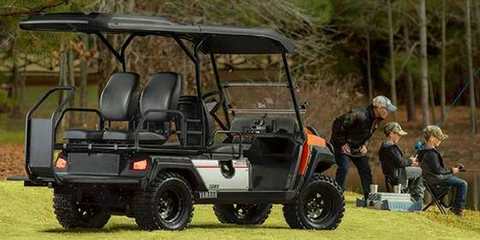
Most of the noise on a gas ATV or a side-by-side comes from the engine. An electric motor does not idle, does not rev, and does not carry that same mechanical bark through a pine stand. Dealers who set up utility carts for hunters, including shops that work with Yamaha UMAX and Club Car Carryall platforms, make the same point: an electric cart is nearly silent on the approach, and even a quiet gas utility cart is still quieter than a typical four-wheeler. See Cunningham Golf & Utility Vehicles for a practical comparison from a dealer that outfits carts for hunting use.
That does not mean an electric hunting cart is silent. Tires on gravel, a rattle in a rack, a loose cooler lid, or a lift kit that has not been tightened will still carry. The motor is the easy part. The rest of the machine has to be set up so it does not undo the advantage. If you hunt pressured deer, or you bowhunt, that last few hundred yards is where a quiet hunting cart is worth the most.
Electric also changes the morning routine. There is no cold-start, no choke, and no warmup before daylight. You get in, turn it on, and roll. For a hunting golf cart that lives at a camp or a cabin with power, that is a real convenience, not just a marketing line.
Noise and scent
Deer, turkey, and hogs all react to sound, and they use their noses just as much. A gas engine leaves exhaust and a hot-metal smell on the path you just drove. An electric golf cart for hunting produces no exhaust. That does not make you scent-free. You still have human odor, gear odor, and whatever is on your boots. It does remove one of the stronger mechanical smells that can hang in still air on a damp South Georgia morning.
A few habits protect the advantage:
- Park and walk the last bit when you can. A quiet cart is still a moving shape, and it still crushes leaves.
- Keep racks, baskets, and tools tight. A rattling gun boot or a bouncing cargo box is louder than the motor.
- Watch your tires. Aggressive paddles on hard-packed sand or dry pine straw can roar. A moderate all-terrain tread is usually quieter and still works on firebreaks and food plots.
- Do not use the cart as a mobile stand if the landowner or the regulations say otherwise. The point is to get in quietly, not to drive around a field until something moves.
Hunting-cart builders make the same case: silence, no exhaust, and a cargo bed you can actually load are the reasons people switch. TIGON Golf Carts lays out those tradeoffs for hunting use, including the limits of a golf-cart chassis on rough ground.
Range and batteries: lithium versus lead-acid
Quiet does not matter if you cannot get back to camp. Range is the first question to settle, and it depends on the pack, the terrain, the load, and the temperature. A cart that will run all afternoon on a dry, flat plantation road may fade early on a wet January day with a lift kit, big tires, two people, and a deer in the basket.
Traditional golf carts use a group of deep-cycle lead-acid batteries in a 36-volt or 48-volt pack. They are heavy, they need regular charging, and flooded cells need watering. They do not like to sit discharged, and they lose a noticeable amount of capacity in the cold. They are also familiar. Most shops have been servicing them for decades, and a replacement pack is usually easier to find in a hurry.
Lithium packs, usually lithium iron phosphate (LiFePO4) made for golf-cart use, are lighter, typically charge faster, and can be used through more of their rated capacity. They do not need watering. In a hunting cart, the weight savings is not just a comfort item. A lead-acid pack can weigh several hundred pounds. Dropping that weight can help range and is easier on springs and tires, though some of that weight was also traction. Ask the installer how a swap will change handling on soft ground.
A documented conversion on a Club Car Villager, published in the GSTF Journal of Engineering Technology, found that moving from flooded lead-acid to lithium increased range by about 47 percent, cut charge time sharply, and reduced battery weight by about 63 percent. That is one conversion on one cart, not a promise for every pack. It is a solid reminder that chemistry and weight both matter.
Cold weather is where a lot of hunting packs get mistreated. Lithium generally holds more usable capacity in the cold than lead-acid, which is one reason it is a good fit for deer season. Charging is a different issue. Trojan Battery and other lithium makers are clear on this: a standard LiFePO4 pack should not be charged when the cells are below 32 degrees Fahrenheit. A battery management system with a low-temperature cutoff should block the charge. Charging a frozen cell can damage it. If the cart has been sitting outside on a freezing night, warm the pack before you plug it in. Move the cart into a barn or a cabin, drive it briefly so the cells warm up, or use a pack with a built-in heater if the manufacturer says that heater is designed for charging below freezing. RELiON gives the same guidance for cold-weather lithium use.
Plan the charge around the property, not around a catalog range number:
- If the cart lives at a camp or a cabin with a dedicated outlet, electric is usually the better hunting setup.
- If you park at a gate with no power and cover a lot of miles between stands, a gas utility cart may be the more practical machine, even if it is not as quiet. Cunningham’s hunting-use writeup makes that distinction plainly.
- Use the charger that matches the pack. A lead-acid charger is the wrong tool for a lithium pack, and the reverse can be just as bad.
- Do not trust a used cart’s range claim. Have a shop load-test the pack, and get the voltage, chemistry, age, and brand in writing. For a longer comparison, see our lithium versus lead-acid battery guide.
Lift kits and tires
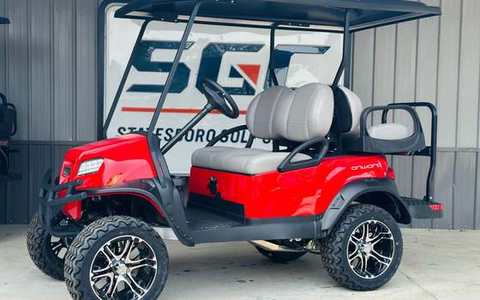
A stock course cart sits too low for most hunting property. Roots, ruts, and wet edges will hang it up. A lift kit and a set of all-terrain tires are the usual first upgrades, and they should be treated as a package, not as leftover parts. A tall tire on a stock chassis will rub. A tall lift with turf tires will still spin in sand. A lift that was not installed as a matched kit can throw off the steering, the brakes, and the way the cart sits under a load.
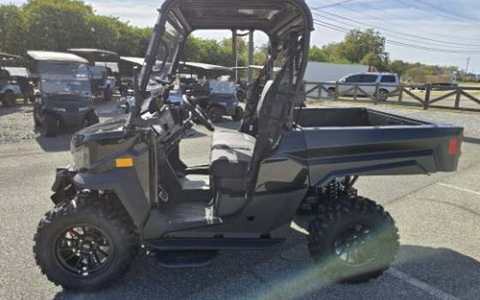
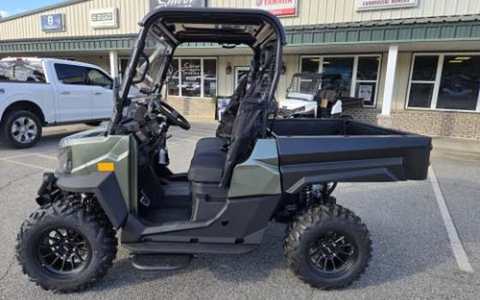
Four to six inches of lift is common on hunting golf carts and will usually clear a 22- or 23-inch tire. That is enough for firebreaks, food plots, and most plantation roads. It is not enough for a trail that already gives a side-by-side a hard time. Utility platforms such as a Yamaha UMAX or a Club Car Carryall start with more clearance and a real cargo bed; a lifted passenger cart can work, but it is still a golf-cart chassis and golf-cart brakes.
Match the tire to the ground you actually hunt, not to a photograph:
- Moderate all-terrain tread works on mixed sand, clay, and pine straw and stays quieter than a deep mud tire.
- Taller 23-inch tires generally need a lift and the right wheels. An 18-inch all-terrain can be a sensible choice on a cart that stays closer to stock height.
- Soft ground after a rain is the real test in South Georgia. Walk or ride the property in the season you hunt before you spend money on a specialty tire.
Have a shop that regularly does this work install the lift, and ask them to check brakes, steering stops, and axle alignment when they are done. A hunting cart that wanders or dives under braking is not a hunting cart you want on a two-track in the dark.
Camo
Camo will not hide a moving cart. It can break up the outline of a machine parked under a pine edge, and it will keep a light-colored seat from flashing in the sun. Seat covers also earn their keep in a simpler way: they keep mud, blood, and wet gear off the original cushions, and they are easier to wash than a factory seat.
A woodland cover or a camo net can help a cart that sits near a field or a food plot during the day. Keep it from hanging in the tires or the steering, and take it off if you have to use a public road. On most South Georgia hunts, camo is a finishing touch, not the reason the cart works. Quiet, traction, and a place to put the gear matter more.
Gun and bow racks
A rifle sliding under a seat, or a bow bouncing in the cargo box, is a good way to ruin a scope, a cam, or a morning. Carry firearms unloaded, pointed in a safe direction, and secured so they cannot shift when you hit a rut. That is basic courtesy on a hunt club and, on some properties, a written rule.
Floor-mount gun holders are common on golf carts because many carts have no roll cage. Look for a rack that clamps the action and the barrel with padded contacts, does not block the driver’s view, and comes off when you do not need it. On a UTV or a side-by-side, overhead Quick-Draw style racks and in-bed racks are a better fit, and a hard gun boot gives more weather and brush protection if you have a place to mount it. Measure the roll bar or the bed before you order. A rack that almost fits will rattle.
Bows and crossbows need their own cradles. Do not strap a bow into a rifle rack and hope the cams clear the roof. A purpose-built bow holder, or a padded scabbard that keeps the limbs from taking a hit, is worth the space. Never transport a loaded gun in a rack. If you get out to walk in, take the firearm with you or lock it up according to the landowner’s rules. A quiet hunting cart does not change safe handling.
Lighting
Deer season in Georgia means a lot of dark mornings and dark rides back. A cart that will be used before daylight needs a headlight and a taillight at minimum. Many hunting setups add a modest light bar or a pair of pods for the trail, plus a small dome or work light for unloading at the truck.
Keep the lighting useful and polite. A 22-inch bar can light a firebreak well; a huge roof bar is usually more glare than you need and is a poor idea if you ever share a road with other people. Aim the lights so they light the path, not the tree line you are trying to slip into. Check the wiring. Lights should run through a proper harness and, on many electric carts, a 12-volt reducer or a dedicated accessory battery, not a pair of scotch-locks on a traction cable.
If any part of the trip is on a public road, lighting is not just a convenience. Georgia has separate rules for golf carts and low-speed vehicles used on streets. Read our Georgia street-legal golf cart laws guide and the local ordinance before you assume a hunting setup is legal between parcels. Off-road lights are often not a substitute for street-legal headlamps, and some auxiliary lights are not approved for road use at all.
Game baskets and cargo
The cargo problem is why a lot of people stop walking in from the truck. A hunting golf cart should have a place for a stand, a pack, a saw, a cooler, and a way to get a deer or hogs back without stacking them on the seat. A front mesh basket is handy for light gear and keeps the weight where you can see it. A rear steel cargo box, a utility bed, or a rear-seat kit with a folding bench gives you a real load floor. High sides and a tailgate that actually latches matter more than a camo wrap on the box.
Think about cleanup when you shop. A smooth bed or a liner you can hose out is better than carpet after a successful hunt. Tie-down points are not optional. A basket without straps is just a place for things to bounce out. On a UTV, a game-loader rack with a small winch can save your back, but stay inside the machine’s rated capacity and the cage limits. A golf cart is not a winch truck. If you routinely pack out heavy game on rough ground, you may be in side-by-side territory, not cart territory.
Do not overload the rear of a lifted cart. Extra weight on a tall machine changes the way it steers and stops, especially downhill on loose sand. If you are buying a used cart for hunting, look at the springs, the bushings, and the bed mounts as carefully as you look at the battery.
Georgia hunting seasons and land use
This site does not interpret hunting law. Seasons, bag limits, and vehicle rules change, and they can differ by county, by wildlife management area, and by land type. Read the current Georgia DNR hunting resources and the official regulations at GoHuntGeorgia.com before you go. Buy licenses at GoOutdoorsGeorgia.com. If you have a question about using a vehicle while hunting, ask a game official.
For the 2026-2027 license year, which runs July 1, 2026, through June 30, 2027, the official Georgia Hunting and Fishing Regulations list statewide deer archery from September 12 through October 9, primitive weapons and youth-only firearms from October 10 through October 16, and firearms season from October 17 through January 10. Extended archery runs through January 31 in listed counties. County-level either-sex days, antler restrictions, and turkey dates are in that same guide. Do not rely on a memory of last year’s calendar, and do not treat this page as the official table.
Where you may drive the cart is a separate question from whether the season is open.
On private land, the landowner’s rules come first, along with any hunt-club rules and the statewide hunting regulations. A quiet electric cart is a common tool on leases and family places in South Georgia. Permission to hunt is not automatically permission to drive every trail, and a hunting buggy is not automatically legal on the county road between two parcels.
On wildlife management areas, golf carts are treated as motor vehicles and as all-terrain vehicles. Under Georgia Rule 391-4-2-.62, an ATV includes utility vehicles, golf carts, and other off-road vehicles. The current Georgia public hunting regulations and that rule, taken together, set a fairly tight box:
- All motor vehicles are restricted to roads open for vehicular access. An “open road” is one that is not closed by a gate, a sign, an earthen berm, or a similar device.
- ATVs, including golf carts, may be operated on those open WMA roads only from two hours before sunrise to two hours after sunset, and only on the day before and during big-game, small-game, and hog-only hunts, by hunters who are actually participating in the hunt, except where a specific area says otherwise.
- Operators must be at least 16 years old.
- Motor vehicles must meet the safety, licensing, insurance, and registration requirements that apply for use on public roads. There is a limited exception for some ATVs on WMAs that are not on National Forest land; do not assume a hunting cart is exempt.
- On National Forest land, including WMAs on the National Forest, ATVs are restricted to designated ATV trails unless posted otherwise.
- Hunting within 50 yards of a road opened for vehicular access is prohibited on WMAs. Do not hunt from the cart along an open road.
- Do not park in a way that blocks an open or closed roadway or a gate, and do not drive around a closure.
Check the WMA map, look at notices on GoHuntGeorgia.com, and call the Game Management region office if the status of a road is unclear. Some areas prohibit ATVs altogether. A cart that is welcome on a private pine plantation can be illegal a few miles away on public land.
Georgia state parks are different again. DNR’s park FAQs treat golf carts as motor vehicles. They need a ParkPass, the driver needs a valid driver’s license, and they are limited to established roads with a speed limit of 25 mph or less. They are not allowed on park trails or in areas closed to motor vehicles. That is not a hunting-access rule so much as a reminder that “golf cart” does not mean “allowed everywhere.”
If you harvest game in Georgia, follow Georgia Game Check and any tagging rules for the species. The cart does not change those duties.
Recommended models and where to find them
These are machines that hunters in the South actually buy, matched to dealers in this directory whose own websites list the brand. We do not have inventory feeds, so call before you drive. Nothing here is a paid placement.
Lifted electric golf carts
- Evolution D5 Ranger and D5 Maverick. Lithium, lifted, and set up with off-road tires from the factory. Fat Boys Golf Carts listed both on its home page, and Hawg’s Golf Cart in Savannah had them on the lot when we checked. See Fat Boys in Covington, Fat Boys in Athens, and Hawg’s in Savannah. Botero Carts in Peachtree City is also an Evolution dealer.
- Club Car Onward Lifted. Sold in electric HP and lithium versions. RideNow Tallahassee, about half an hour from Thomasville, listed lifted Onward models, and Cart World and Jeffrey Allen are long-running Club Car dealers in Florida. In South Georgia, Potter Motor Company in Albany sells Club Car.
- E-Z-GO with an ELiTE lithium pack and a lift. Shiver Carts in Tifton and Valdosta is an authorized E-Z-GO dealer and sells lifts, rims, and tires. The Cart Barn near Augusta also adds lift kits and light bars to E-Z-GO carts.
Purpose-built hunting carts
- Bad Boy. Bad Boy built its name on electric hunting buggies. Shiver Carts is an authorized Bad Boy Buggies dealer, and Mission Golf Cars in San Antonio lists Bad Boy off-road vehicles.
- Kodiak hunting cart. Golf Cart Specialists in Columbus has listed a Kodiak Defender hunting cart in a Mossy Oak finish.
- Bird Buggy. A Leesburg shop listed for hunting buggies. See the Bird Buggy listing.
- Southeastern Carts in Tifton builds custom and refurbished gas and electric carts and can set one up to your needs. Their website was down when we built this page, so call (229) 238-3792. See the Southeastern Carts listing.
When you need a UTV instead
- Polaris Ranger XP Kinetic. The electric UTV Polaris built with hunters in mind. Polaris estimates 50 to 70 miles of hunting use on the Ultimate trim and up to 45 miles on the Premium (Polaris). Ask about availability at Polaris dealers such as Offroad Powersports in Tifton, Capitol Cycle in Macon, Dothan Powersports, and RideNow Canton.
- Gas utility side-by-sides. Can-Am Defender, Polaris Ranger, and similar machines are louder but go farther. Volume Powersports in Valdosta and Mike’s Golf Carts and Powersports in Douglas list Can-Am. More are on side-by-sides for sale and in the 4x4 and UTV buying guide.
Buying checklist
Use this as a conversation list with a dealer, not as a ranked list of brands. Look at the machine in person, on ground like the ground you hunt, if you can.
- Where will I charge it, and does that plan work in December as well as in September?
- What pack is in the cart right now: voltage, chemistry, brand, age, and charger?
- Can the shop load-test the pack and put the result in writing?
- How far do I actually travel from camp or the truck on a normal hunt, and how much of that is sand, clay, or standing water?
- How many people and how much gear ride with me, including after a successful hunt?
- Is this a utility cart with a real bed, or a passenger cart with a lift and a basket? Which one matches the work?
- Were the lift, tires, and brakes installed as a package the shop will stand behind?
- Where will the rifle or bow ride, and can I secure it without blocking the steering or the driver’s view?
- Are the lights and any 12-volt accessories wired through a proper reducer or accessory circuit?
- If I need to use a public road between parcels, does this cart meet the street-legal rules that actually apply there?
- If I hunt public land, have I read the WMA or National Forest vehicle rules for that property?
- Who will service this cart during the season, and how long does it take to get parts?
If the property is steep, cut with deep drains, or already hard on side-by-sides, buy the side-by-side. A quiet electric hunting cart is a strong tool on the right land. It is a poor one on the wrong land. For a broader look at hunting buggies, lifted carts, and UTVs in this region, see our South Georgia hunting carts guide and the hunting cart dealer list.
Frequently asked questions
Is an electric golf cart quieter than an ATV for hunting?
Yes, in the ways that matter on the approach. An electric motor does not have the engine noise of a gas ATV or most side-by-sides. You will still hear tires, racks, and the chassis, so a quiet hunting cart has to be put together carefully. Electric is the quietest option when you have a place to charge. A gas utility cart is usually quieter than a four-wheeler but is not as quiet as electric.
Do I need a lithium battery in an electric golf cart for hunting?
No, but lithium is often the better long-term choice if you can charge at camp and you want more usable range and less weight. Lead-acid still works for shorter days and is easier for many shops to service. What you should not do is guess. Get the pack tested, use the correct charger, and be honest about how far and how hard you drive on a hunt.
Can I charge a lithium golf cart battery on a freezing morning?
Not until the cells are above freezing, unless the pack has a built-in heater and the manufacturer says that heater is meant for charging below 32 degrees Fahrenheit. Warm the cart in a building, drive it briefly to raise the cell temperature, or follow the pack maker’s cold-weather instructions. Discharging in the cold is usually allowed within the pack’s rated range; charging a frozen pack is the risk.
Can I drive a golf cart on a Georgia wildlife management area?
Only under the vehicle rules that apply to that area. On WMAs, golf carts are treated as motor vehicles and ATVs. They are limited to open roads, and ATV use is confined to a set window around hunt days, by hunters who are actually hunting, with a minimum operator age of 16. National Forest rules can be stricter. Read the current DNR regulations and the map for the specific WMA. Do not assume a cart that is fine on private land is legal on public land.
Will a lifted golf cart handle South Georgia hunting land?
It will handle many plantation roads, firebreaks, and food plots if the lift, tires, and brakes were installed as a package and you stay off the worst ground. It will not handle steep, deeply rutted, or flooded trails the way a four-wheel-drive UTV will. Walk the routes you actually use, in the season you hunt, before you buy.
How should I carry a rifle or a bow on a hunting golf cart?
Unloaded, secured, and out of the way of the driver. Use a rack or a boot made for the weapon you carry, and do not leave a firearm loose on the seat or in the basket. Follow the landowner’s rules and basic firearm safety. A rack is for transport, not for hunting from the cart.
What range should I expect from an electric hunting cart?
Enough for a normal day only if the pack is healthy and the terrain is within its limits. Catalog range is usually measured on easier ground than a wet food plot or a sandy two-track with a loaded basket. A lithium pack generally gives more usable range than a comparable lead-acid pack, but hills, mud, cold, big tires, and extra weight all cut into it. Plan a reserve, and charge whenever you are back at camp.
Sources
- Georgia DNR, Hunting in Georgia (hunter resources, seasons, and Game Check)
- GoHuntGeorgia.com (official regulations and WMA notices)
- Georgia Hunting eRegulations, Public Hunting Opportunities
- Ga. Comp. R. & Regs. r. 391-4-2-.62, Vehicle, Horse, ATV and Other Conveyance Use on Wildlife Management Areas
- Georgia State Parks, Frequently Asked Questions (golf carts and motor vehicles in state parks)
- GoOutdoorsGeorgia.com (licenses and permits)
- Cunningham Golf & Utility Vehicles, Using a Golf Cart for Hunting
- TIGON Golf Carts, Best Golf Cart for Hunting
- Al-Refai and Khawaja, “A Viability Study of a Lithium Battery Powered Golf Cart,” GSTF Journal of Engineering Technology
- Trojan Battery, How to Winterize Lithium Golf Cart Batteries
- RELiON, Lithium Batteries for Cold Weather Applications